

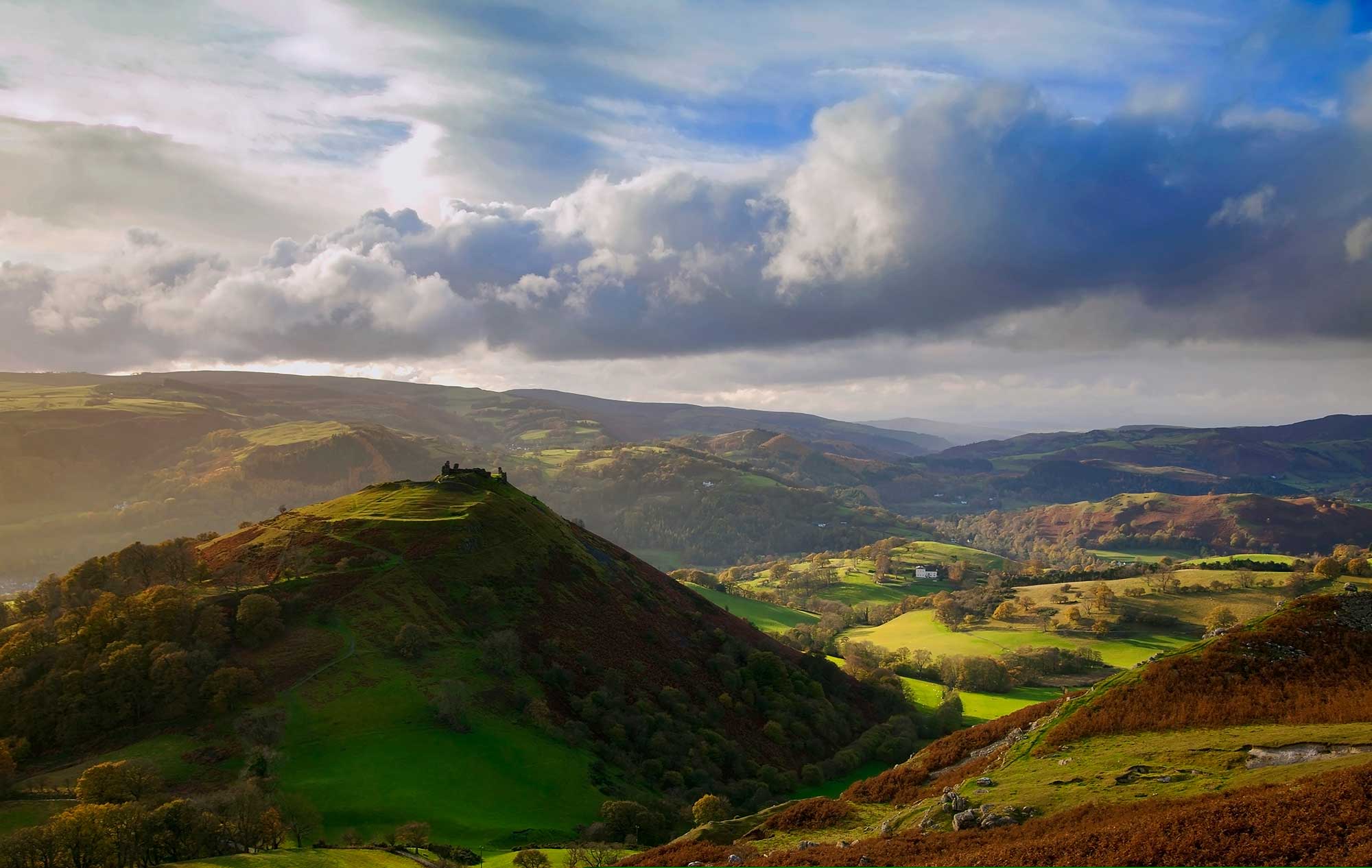
From crumbling ruins to a magnificent medieval fortress there’s lots to discover.
Y Gop
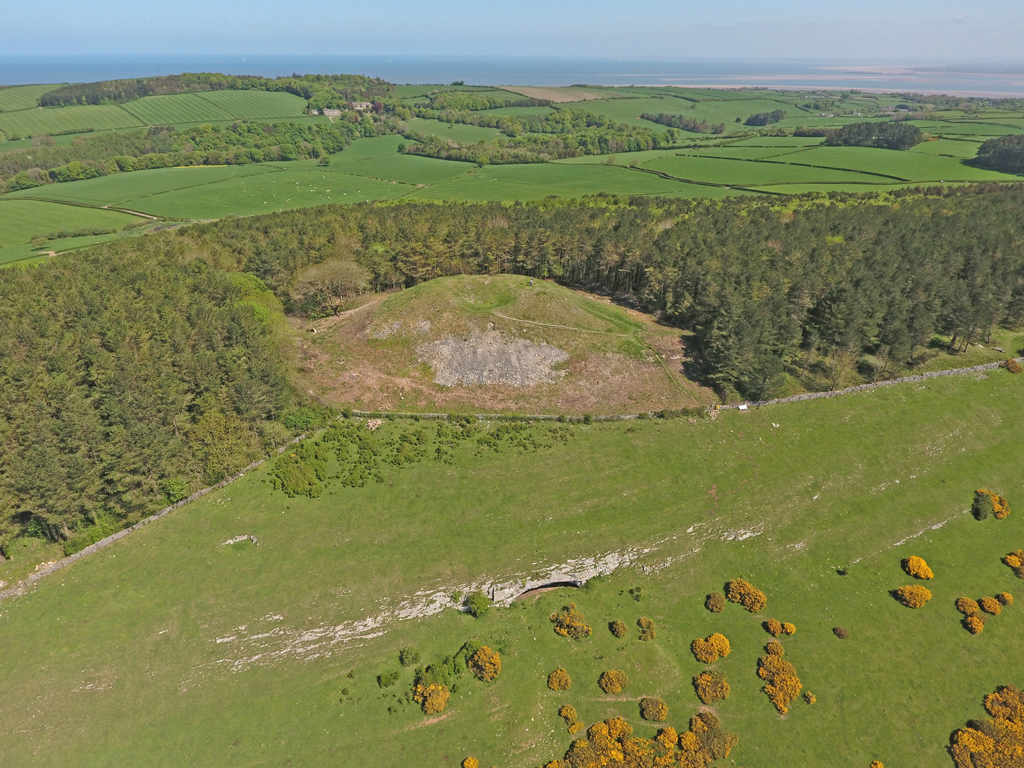
Y Gop Cairn is Wales’ largest prehistoric monument, the enormous neolithic cairn of Y Gop is impossible to miss. Rising some 12m atop Gop Hill, itself over 840ft in height, and some 75-80m in diameter, this titanic cairn dominates the landscape. From its height, the mountains of Eryri are visible, the Clwydians marching away to the south, the Great Orme at Llandudno and the Bay to the west. It certainly commands a mighty vista from its elevated limestone plateau on the north coast of Wales, close to Prestatyn.
Very little is known about Y Gop especially when compared to English contemporaries such as Silbury Hill in Wiltshire which is part of the Avebury UNESCO World Heritage Site. In the nineteenth century the only excavation of the monument took place and a shaft was sunk to its centre. This shed little light on its original purpose but it was clearly a place of enormous significance. Excavations at the neotlithic Y Gop Cave have revealed human skeletons, prehistoric flints and pottery.
Valle Crucis Abbey
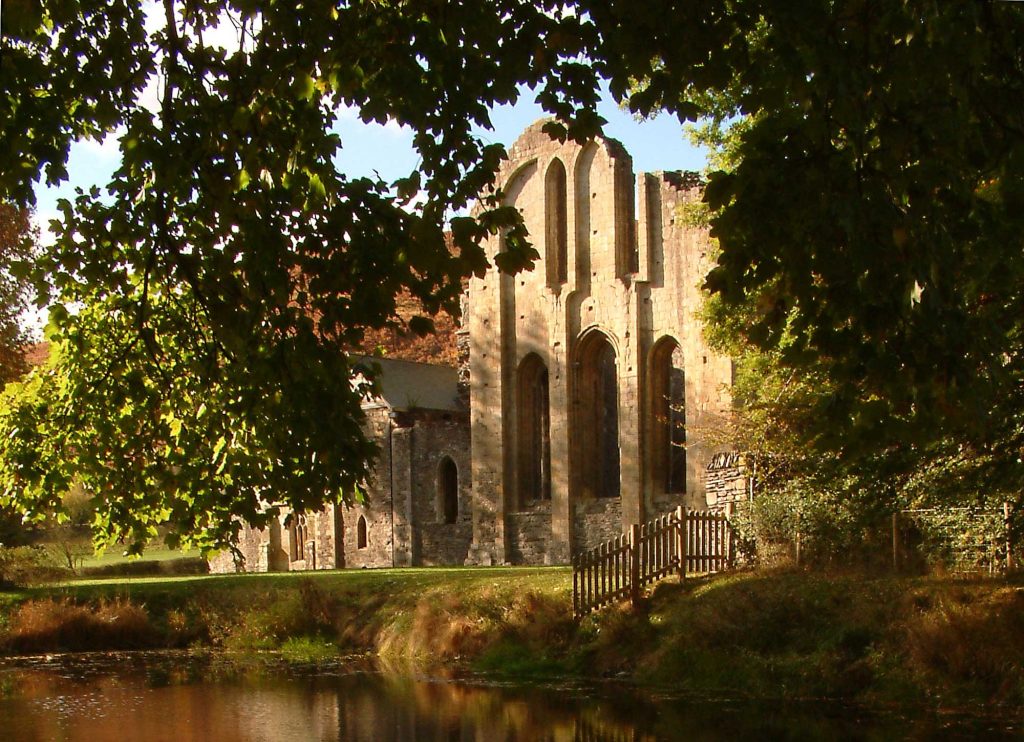
Hill-encircled Valle Crucis Abbey is among Denbighshire’s loveliest historic places, and is much the best preserved medieval monastery in North Wales. Founded “far from the haunts of men” in 1202 by a local Welsh prince, its monks were white-robed Cistercians. Valle Crucis was once the second-richest abbey in Wales after Tintern and was lived in until the dissolution of the monasteries in 1537.
Among many memorable features is the still-towering west front of the church, with its rose window above triple-pointed lancets, and the beautifully vaulted chapter house. Also worth viewing are the monks’ dormitory and the picturesque monastic fish pond beyond the extensive ruins. But Valle Crucis is not just a lesson in medieval ecclesiastical architecture. A visit to this fascinating site evokes the lives of the Cistercian monks – successful sheep farmers and enthusiastic supporters of Welsh culture.
Valle Crucis Abbey in the 14th century.
A poem for Valle Crucis Abbey.
Plan a visit.
Chirk Castle
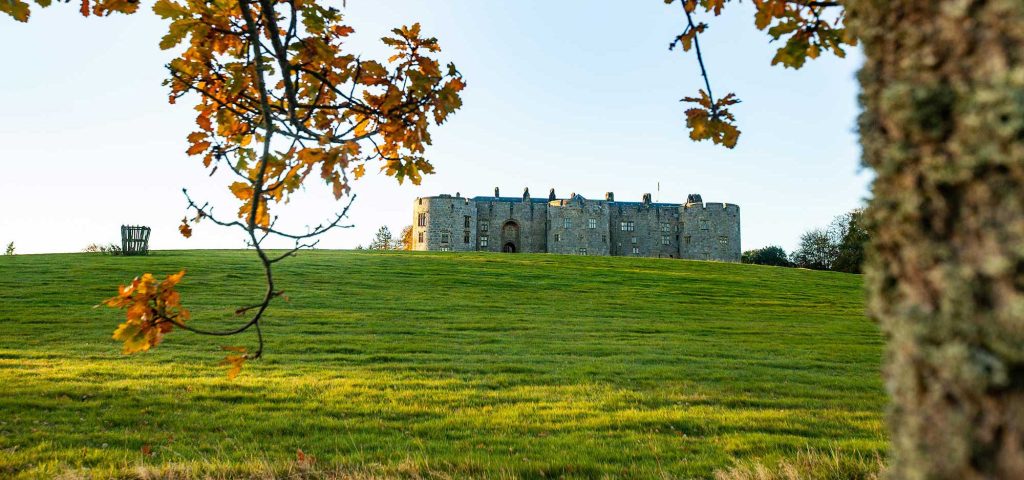
Completed in 1310, Chirk is the last Welsh castle from the reign of Edward I that is still lived in today – it has been continuously inhabited for the last 700 years.
Features from this long history include the medieval tower and dungeon, 17th century Long Gallery, grand 18th century state apartments, servants’ hall, and historic laundry.
This imposing Marcher fortress with its round towers commands views over nine counties. Its gardens – once voted the best in the National Trust – contain clipped yews, herbaceous borders, and shrub and rock gardens.
The parkland provides a habitat for rare invertebrates, wild flowers, and contains many mature trees. Also some splendid wrought-iron gates made in 1719 by the Davies brothers.
A poem for Chirk.
Plan a visit.
Castell Dinas Brân
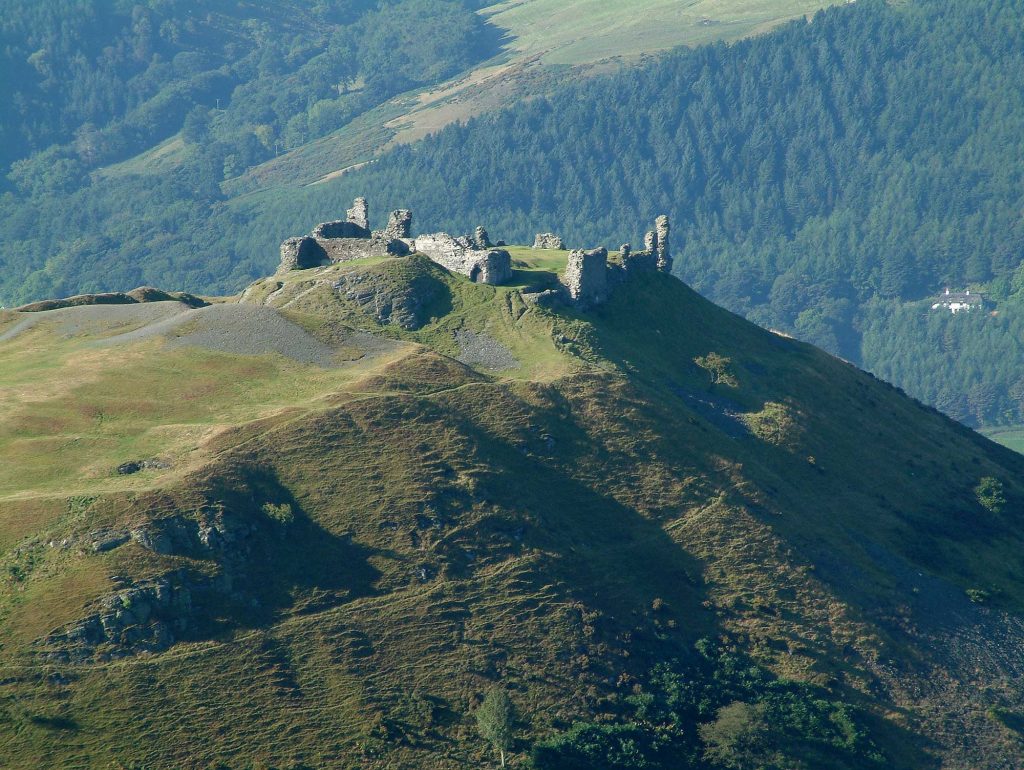
Crowning a craggy hilltop high above Llangollen, Castell Dinas Brân – the Crow’s Fortress – is one of the most dramatically-sited and legend-haunted strongholds in the whole of Britain. Set within the corner of an Iron Age hillfort, it is one of the few surviving Welsh-built stone castles, constructed in the 13th Century by Gruffudd ap Madoc, ruler of northern Powys.
Surrounded by a rock-cut ditch and steep drops, these include the remains of a gatehouse, keep, and characteristic D-shaped ‘Welsh tower’. A closer look reveals traces of features like wall-plaster, fireplaces and even en-suite toilets, demonstrating that this was once a splendid and well-appointed, as well as well-defended, fortress.
Dinas Brân’s active life, however, lasted scarcely 20 years. Begun in the 1260s and abandoned and burnt by its Welsh defenders in 1277, it was then only briefly garrisoned by the English – whose commander remarked “there is no stronger castle in all Wales, nor has England a greater.” But it’s inaccessibility ensured that it was soon abandoned again to the crows which gave it its name.
Watch a digital animation of the habitations on Dinas Brân.
Did You Know?
Some people maintain that The Holy Grail lies buried in a cave deep below Castell Dinas Brân.
The castle’s air of mystery is enhanced by the fact it can only be reached on foot, after quite a stiff climb. But the walk has been made easier by a wide range of improvements undertaken by National Landscape staff and volunteers, who have been busy installing waymarking, kissing gates and stone pitching paths at the castle itself.
The rewards of the climb are not only fabulous panoramic views but also the chance to explore the castle ruins.
Castell Dinas Brân: From Donkeys to Camera Obscuras.
Plan a visit.