
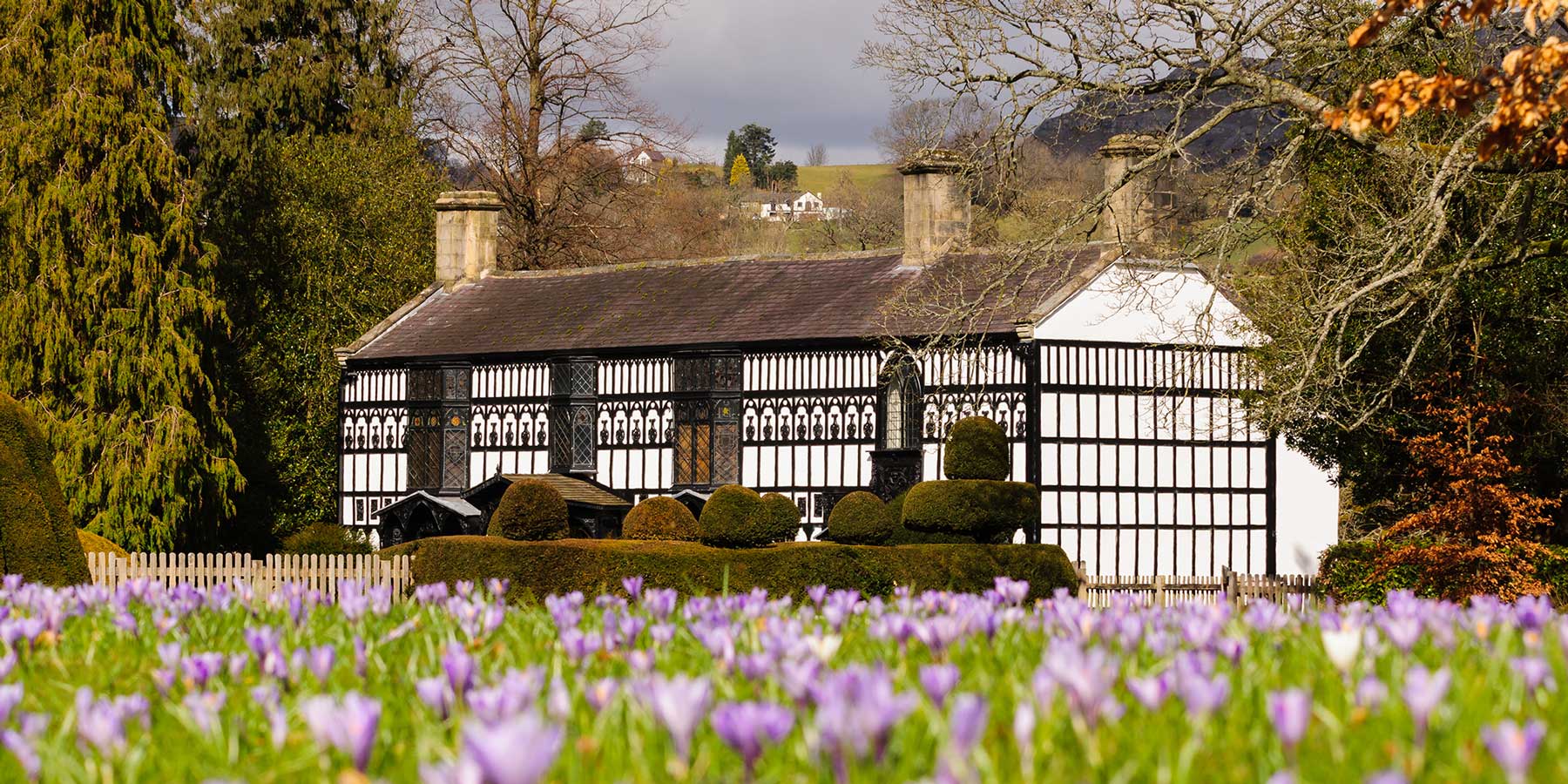
For centuries, our landscape has been the backdrop for unique art and culture that is as valuable as its heather-clad peaks and fascinating historical ruins.
Discovering the Picturesque Dee Valley: A Valley Steeped in Art and Tourism
Wales is the spiritual home of the Picturesque art movement, which urged artists like Turner to lose themselves in nature and had them flocking to the Dee Valley to sample its delights.
The story perhaps starts in 1771 when Sir Watkin Williams Wynn, influenced by his earlier grand tours of Europe, set out on one of the first domestic excursions around his estates of North Wales, accompanied by artist Paul Sandby. Sandby published XII views of North Wales and Sir Watkin commissioned two views of Dinas Brân from Richard Wilson, revealing a most picturesque and sublime landscape.
Around the same time the Ladies of Llangollen, Eleanor Butler and Sarah Ponsonby, from their home at Plas Newydd were establishing the Dee Valley as a centre for picturesque appreciation. They were great champions of the romantic, and society became fascinated by their lives.
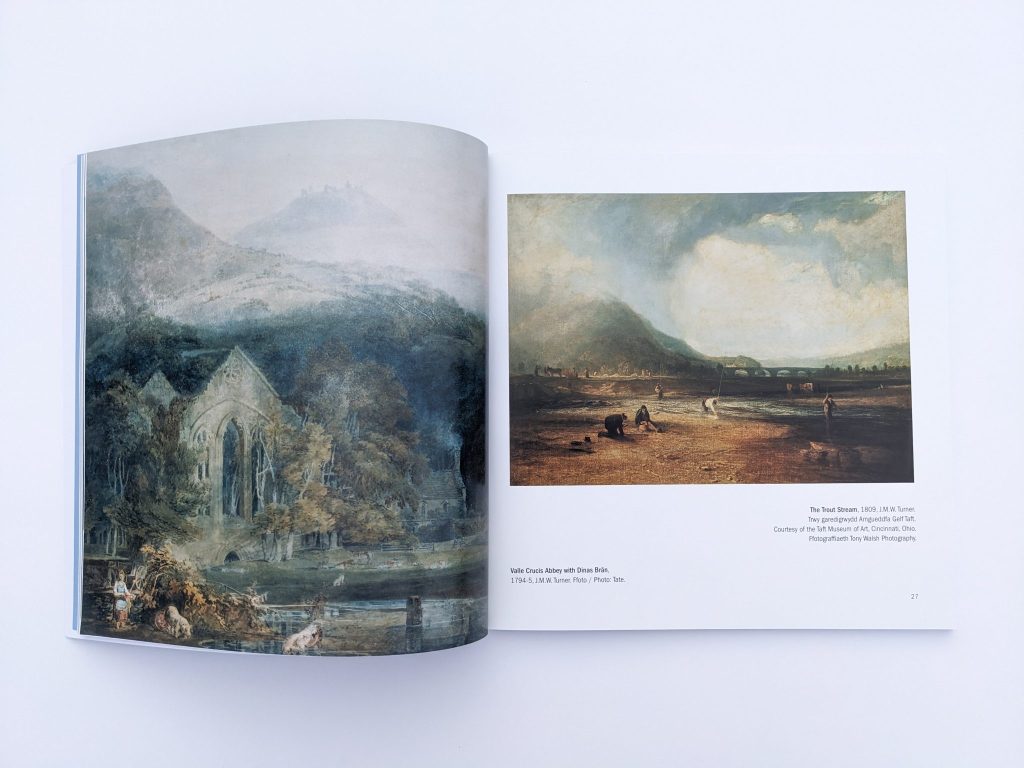
Many of the original paintings have been reproduced by artists following in the footsteps of the early landscape painters. JMW Turner in particular visited the Dee Valley a number of times and depicted the River Dee at Corwen and Valle Crucis and Castell Dinas Brân.
Illustrated books of the area include “Wanderings and Excursions in north Wales” (1836) by Thomas Roscoe, which includes a painting of Valle Crucis. Henry Gastineau produced “Wales Illustrated” in 1830-31 including paintings of Dinas Brân, Valle Crucis and the Llangollen area. George Borrow also included the Dee Valley on his tour of Wales in the 1830s.
Great engineering structures at the time such as the Pontcysyllte Aqueduct, the Horseshoe Falls and the Chainbridge also seemed to have an eye for the aesthetic indicating that grand engineering advances could take their place in the landscape and complement nature.
By the early and mid-19th century the popularisation of the landscape of the Dee Valley combined with other factors begin to establish them in our consciousness as iconic landscapes. The A5 and the railway became tourist routes, bringing visitors to north Wales in numbers and putting Llangollen and Corwen even more on the excursion map.
Today you can visit many of the historic sites following in the footsteps of those early tourists. Ascend to the summit of Dinas Brân; Discover the picturesque Dell at Plas Newydd; Marvel at the engineering masterpieces complementing the landscape at Horseshoe Falls and Pontcysyllte.
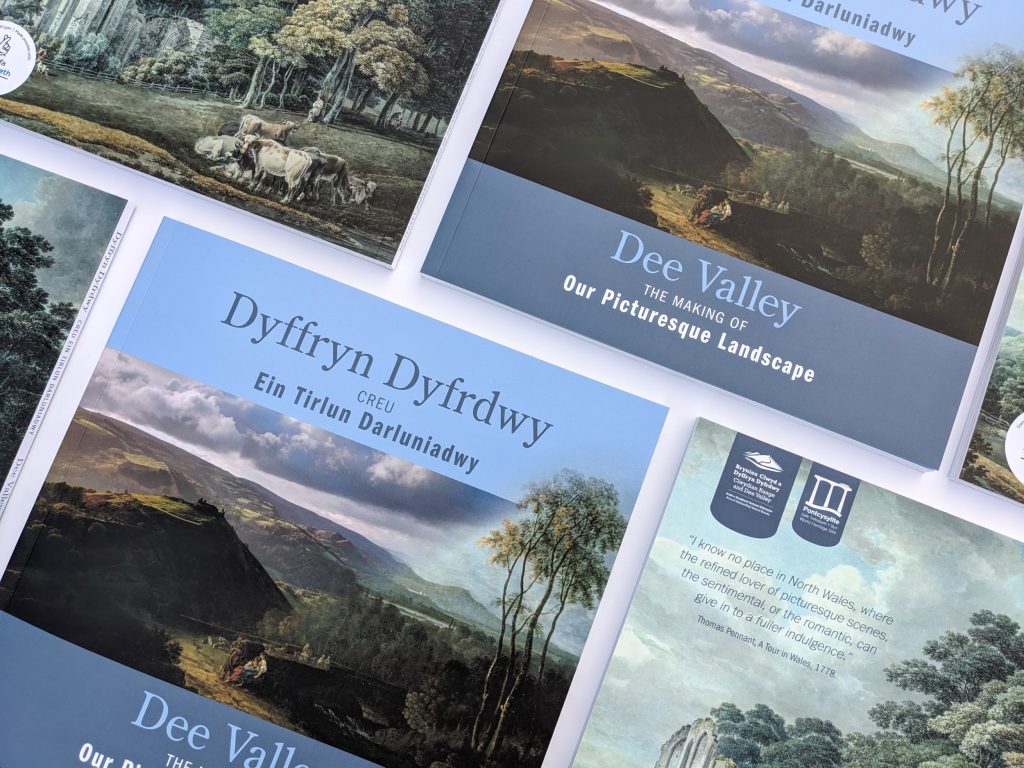
To find out more about the story of the Picturesque Movement within the Dee Valley you can purchase our book ‘Dee Valley: The Making of Our Picturesque Landscape’ from Plas Newydd, Loggerheads or Llangollen Tourist Information Centre. This book was written as part of a National Lottery Heritage Funded Project ‘Our Picturesque Landscape’ between 2018-2024.
Plas Newydd Historic House and Garden
In 1780, Lady Eleanor Butler and Miss Sarah Ponsonby moved into an unassuming stone cottage on the outskirts of Llangollen. Over the next 50 years, they devoted their lives to converting the building into a gothic fantasy, and the gardens into a haven of different landscapes to appeal to the creative senses.
Inside the building you’ll see carved oak and stained glass rescued from local churches that were being restored. On display are some of their possessions and there is an audio tour to tell you the fascinating story of the ‘Ladies of Llangollen’ who caused such a stir when they ran away together to set up home in North Wales.
Did You Know?
The circle of stones in the grounds were placed by the Gorsedd of Bards for the award ceremony of the 1908 Llangollen National Eisteddfod.
Known simply as The Ladies of Llangollen, they were famed throughout Europe as collectors of curiosities and champions of the Picturesque movement. They captured the public imagination, fuelled a tourism boom and played host to the great men and women of the day.
Lady Eleanor and Miss Sarah became celebrated for their friendship and welcomed many visitors to their home, including The Duke of Wellington, Wordsworth, Anne Lister, Sir Walter Scott and Josiah Wedgewood.
The Ladies remained a profound influence on subsequent owners, even as their house and garden were radically changed. Nearly two centuries after their death, we can still feel their presence. We know them intimately through their letters, their journals and the indelible marks they left on the house.
Now you can follow in their footsteps to experience this charming and romantic place. Knowledgeable staff are on hand to answer any questions and the lovely Tearooms serve locally sourced food and drink, and home-baked cakes.
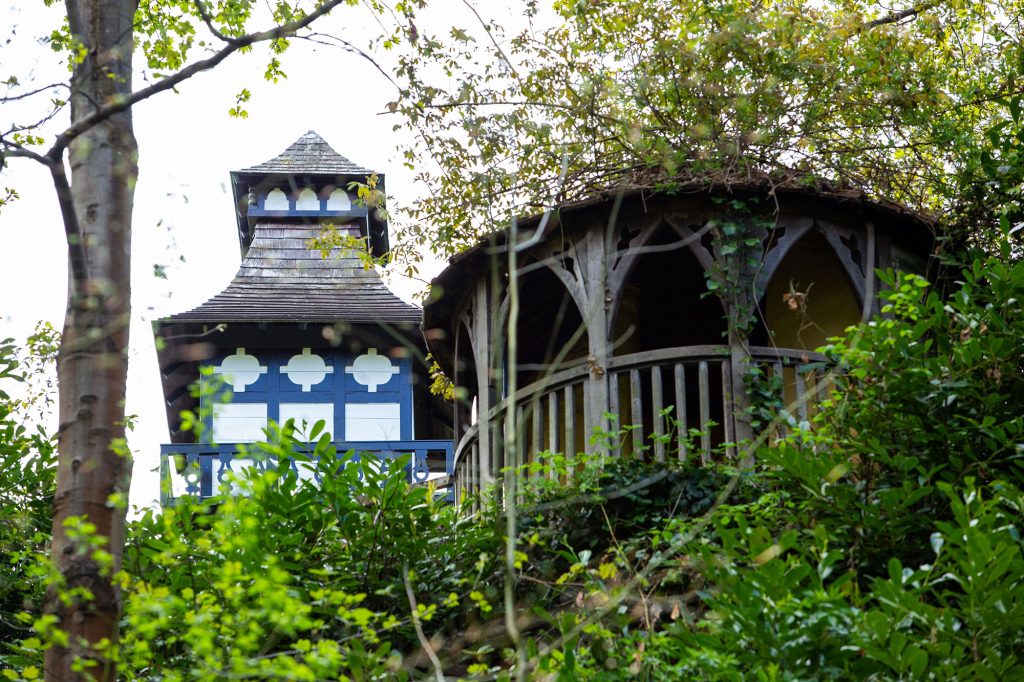
Explore the 10 acres of grounds to discover formal ornamental and rose gardens and beautiful woodland. You can also take a riverside walk through the dell, restored as part of the Our Picturesque Landscape project. Throughout the grounds you will find secluded seating areas, fantastic vistas and carefully planned planting where visitors can stop and appreciate the beauty.
Step back in time and meet the Ladies of Llangollen: Video 1 and video 2.
Poetry inspired by the Ladies of Llangollen.
Plas Newydd when the Ladies of Llangollen lived there.
Coed Pen y Pigyn
(Pen y Pigyn Wood) is set in the Dee Valley adjoining Corwen town centre.
Park in the main car park, follow a footpath past the church and emerge into a steep sessile oak woodland which contains an atmospheric Gorsedd stone circle erected for the National Victory Eisteddfod in 1919. Its architect Iolo Morganwg believed he was descended from the druids. Similar stone circles occur throughout Wales, and are part of an ancient tradition of chairing and crowning the winning bards at Eisteddfodau.
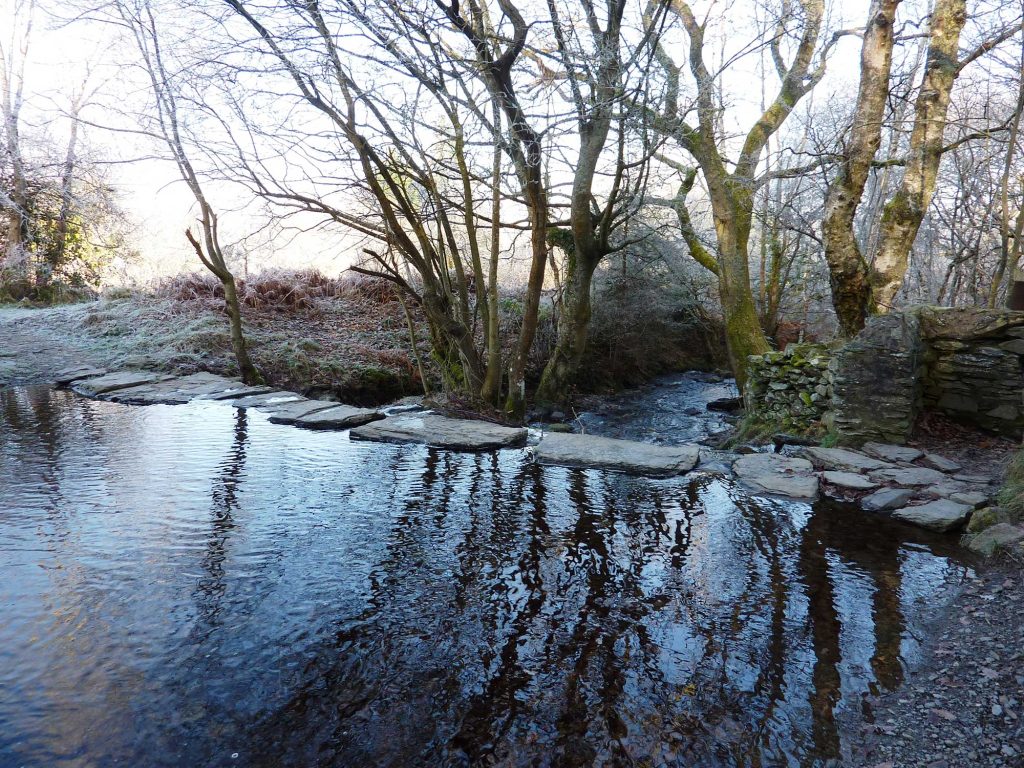
On trails through the ancient woodland you can see lots of sculptures of animals and, if you’re lucky, living breathing ones, too. This is one of the last strongholds in Wales of the increasingly rare red squirrel, which has been in decline ever since the larger American grey squirrel was introduced to Britain in the 1870s.
There is a viewpoint at the spot where legend says Welsh prince Owain Glyndwr, in a fit of rage, hurled his dagger from the hillside with such force that it left its outline in a rock below. The stone, with its strange dagger mark, can still be seen today serving as a lintel above the reconstructed south doorway of Corwen church.
The Jubilee Tower
Built for the golden jubilee of “mad” King George III over 200 years ago, the Jubilee Tower changed the profile of Moel Famau. The foundation stone was laid with great fanfare on Thursday, 25th October 1810, however at that point, no design had been agreed.
The final design by architect Thomas Harrison was elaborate and impressive, in the soon-to-be-fashionable Egyptian style – a rectangular base with four bastions and sloping doorways, which can still be seen today, topped by an obelisk.
Squabbles over lack of money and poor workmanship ensued and the building was only finished, to a less grandiose plan, in 1817. By 1846 one corner had collapsed and the pointing had deteriorated. Money was raised for repairs but further damage was apparent by 1856.
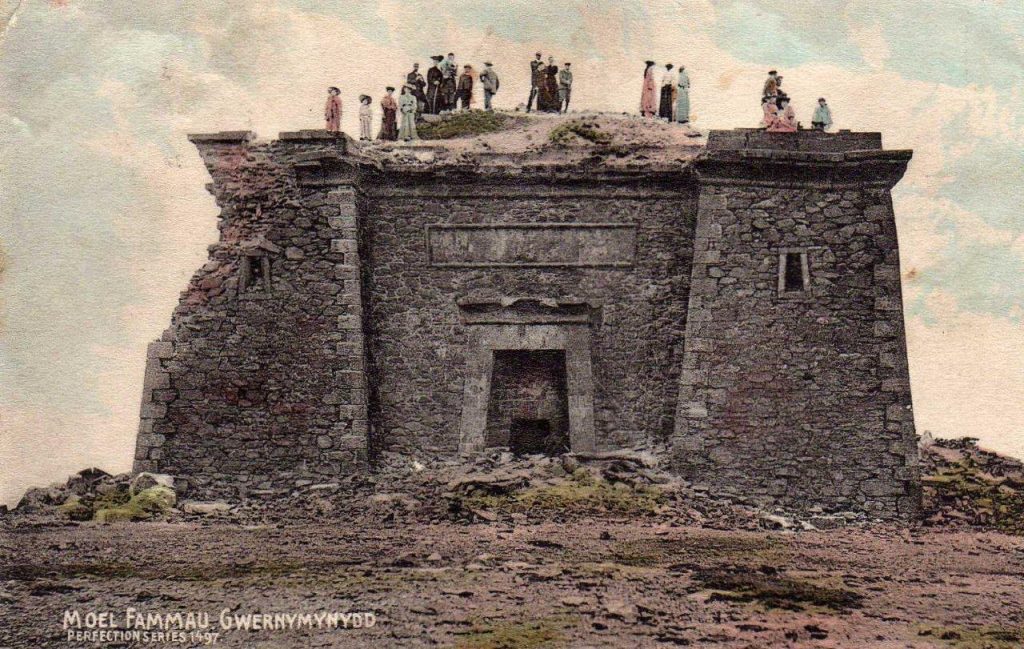
Deterioration was rapid and in 1862 the obelisk collapsed dramatically with a tremendous crash during the calm following a fierce gale that had lasted for two days. It could be heard as far away as Denbigh Castle green.
Over succeeding decades various rebuilding schemes failed for lack of money and support.
Nothing was done until 1969 when the Denbigh and Flint branch of the Country Landowners’ Association decided that their contribution to European Conservation Year 1970 would be to tidy up the ruins and secure them from further deterioration.
In 1974 Clwyd County Council made Moel Famau a Country Park and in 1985 the Clwydian Range was designated an Area of Outstanding Natural Beauty. In 1995 Cadw listed the Jubilee Tower to give it legal protection because of its architectural and cultural significance.
Today, Moel Famau and the ruined Jubilee Tower provide a dramatic backdrop to the daily lives of the communities of both Flintshire and Denbighshire. They give the area a strong sense of place and act as a beacon to visitors from Cheshire, Merseyside and further afield.
Loggerheads Cultural Heritage
Loggerheads is steeped in cultural history.
The very name Loggerheads derives from a bitter mining dispute in the 18th century. You can still see a plaque above the boundary stone on the A494 erected following the resolution of a quarrel between the Grosvenor family, who owned the mineral rights in the parish of Llanferres, and the Lords of Mold, who owned those in Mold parish.
The dispute dragged on for many years before it was eventually decided in favour of the Lords of Mold. The area has been known as Loggerheads ever since.
The boundary stone is called “Carreg Carn March Arthur” (the stone of Arthur’s horse’s hoof) and according to legend it bears the hoofprint of King Arthur’s horse as he leapt from the cliffs to escape the invading Saxons!
In the 1800s the famous landscape artist, Richard Wilson stayed in nearby Colomendy with his aunt. He often frequented the public house in Loggerheads and it is said that having accumulated a rather substantial bar bill he offered to paint a new pub sign in lieu of his bill. He took his inspiration from the well-known dispute and painted the We Three Loggerheads, the third person being the pub landlord witnessing the argument.
Loggerheads has attracted and inspired visitors since at least the 1800s.
In 1829 world famous German composer, Felix Mendelssohn visited Wales and was inspired by the landscape around Loggerheads to compose many of his famous pieces. One of his works ‘The Rivulet’ is said to have been inspired by the River Alun.
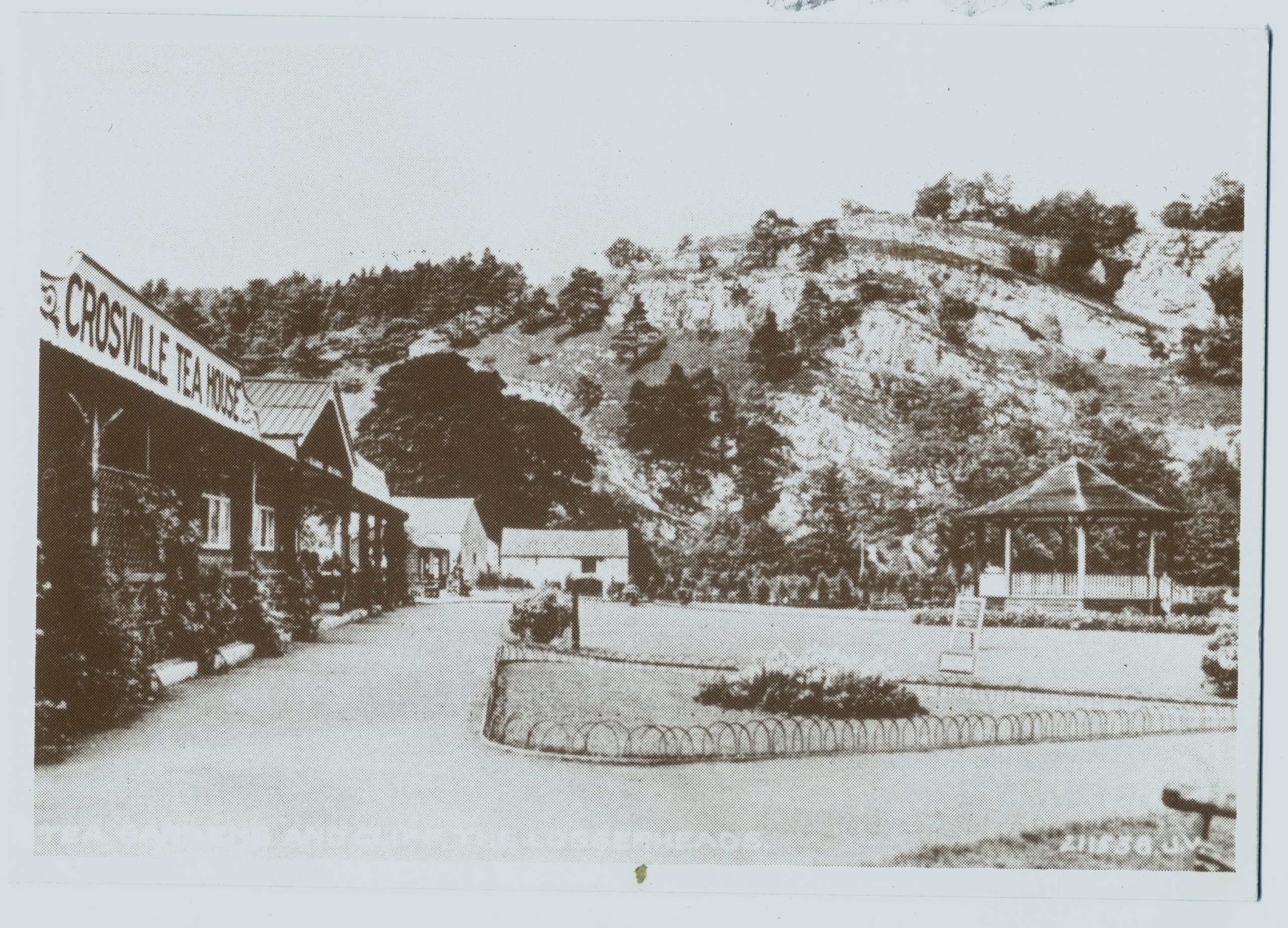
In the early 20th century Crosville Motor Services began running regular buses to Loggerheads from Birkenhead and in 1926 they bought 74 acres of the Loggerheads Estate to develop it as a visitor destination.
They established the Crosville Tea Gardens, building a large tea-house, adding a bandstand, a putting-green and other attractions and opening up the woods and riverside for visitors.
In 1928, there was a special “Grand Musical Eisteddfod” at Loggerheads. This was advertised in the bus timetable for the period.
In its heyday the bus service brought thousands of Merseysiders to Loggerheads on summer weekends. Passenger numbers gradually declined as car ownership increased during the Sixties and in 1974 Crosville sold the land to Clwyd County Council, the precursors of Denbighshire and Flintshire County Councils, who developed and opened it as a country park.
The area was also a welcoming refuge for children during the war and that link continued with families visiting post war and thousands of school children visiting Colomendy. Loggerheads still has a special bond with the people of Liverpool and Merseyside. Many still return just for day trips and others have settled here to work or retire.
Learning Zone
Inspiring curiosity and wonder about this special place.
Ruthin Gaol
Enjoy a unique Victorian prison experience with plenty of interactive trails and activities for younger visitors