
Coed Bell bluebells – singing through centuries
In a woodland overlooking the sea, bluebells sing – lulling the departed in their everlasting sleep.
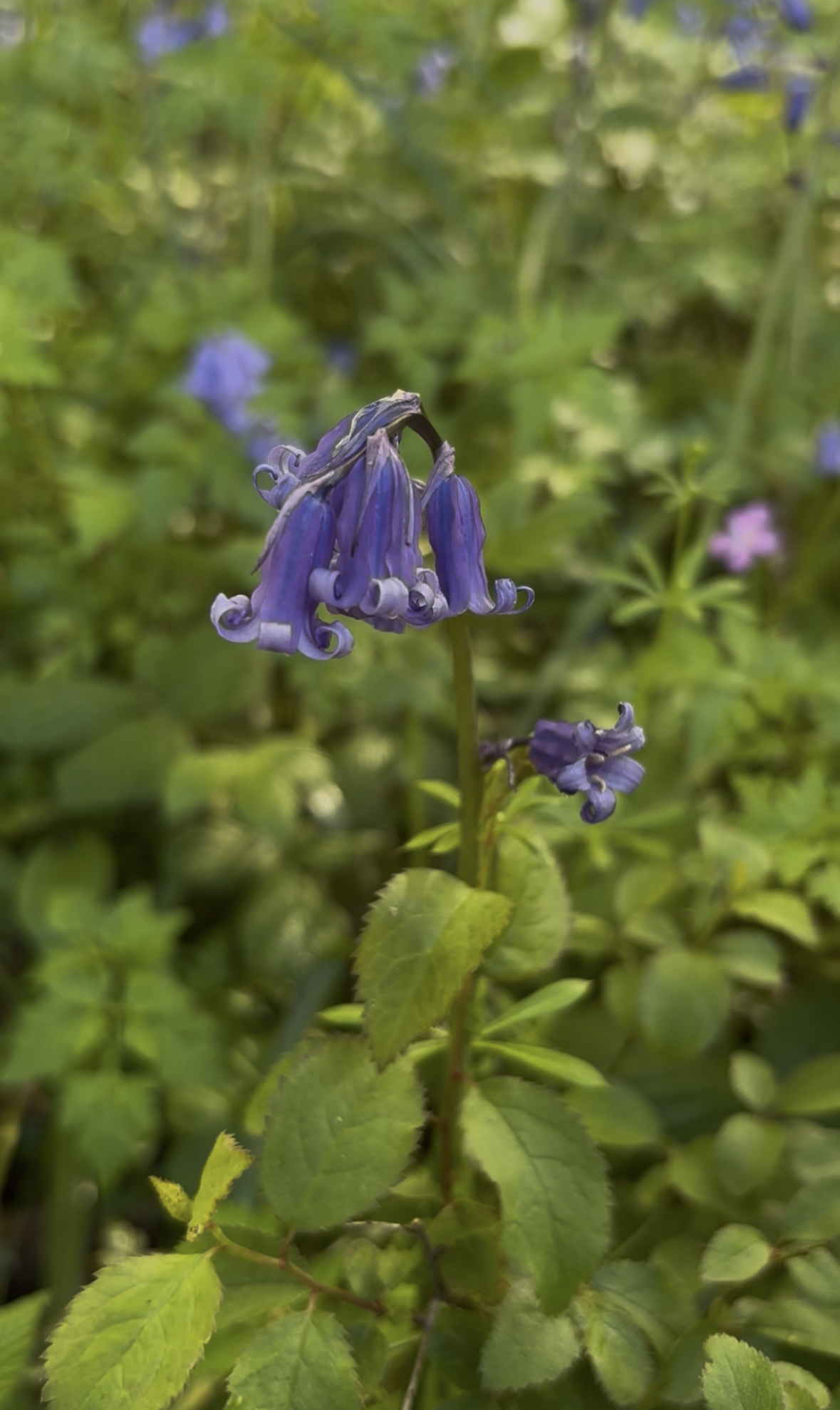
An ancient resting place yet full of life, Coed Bell is in full bloom with its stunning display of native bluebells. These beautiful flowers can be found carpeting the ancient woodland behind the modern cemetery.
These flowers were the focal point of the woodland walk led by Ranger Steve on Saturday 16th of May, part of the 21st annual Prestatyn and Clwydian Range Walking Festival.
The UK is home to half of the world’s population of bluebells, so conserving them in our landscapes is vitally important. Bluebells are ancient woodland indicators and mark significant sites that have stood the test of time, growing and thriving alongside us. These sites carry an ancient knowledge and an ancient network that has developed and survived for centuries, their species working collaboratively to ensure their shared future. These flowers are a cherished part of British natural heritage and can be seen in folklore and mythology across the country.
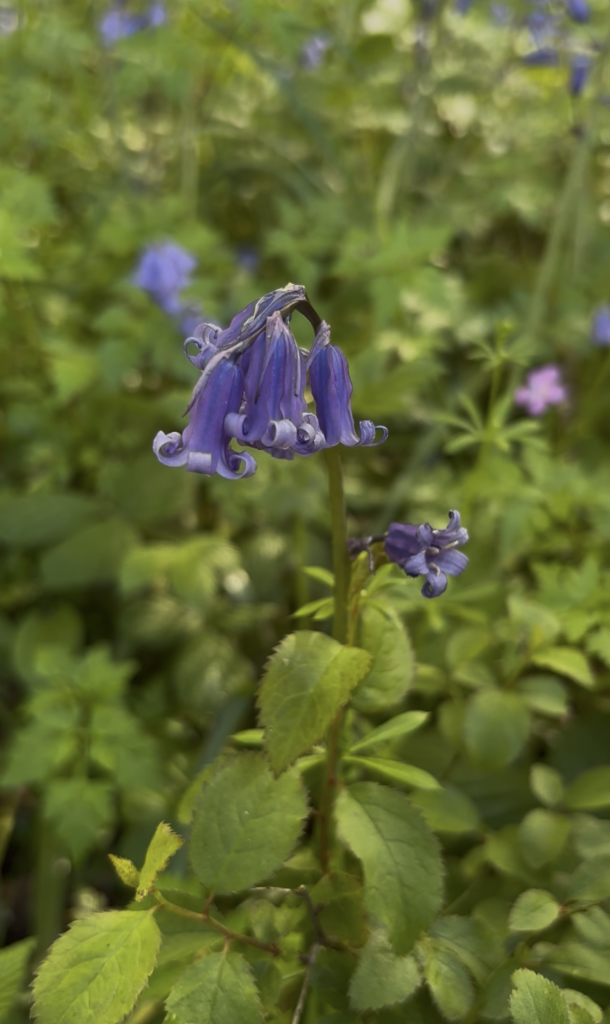
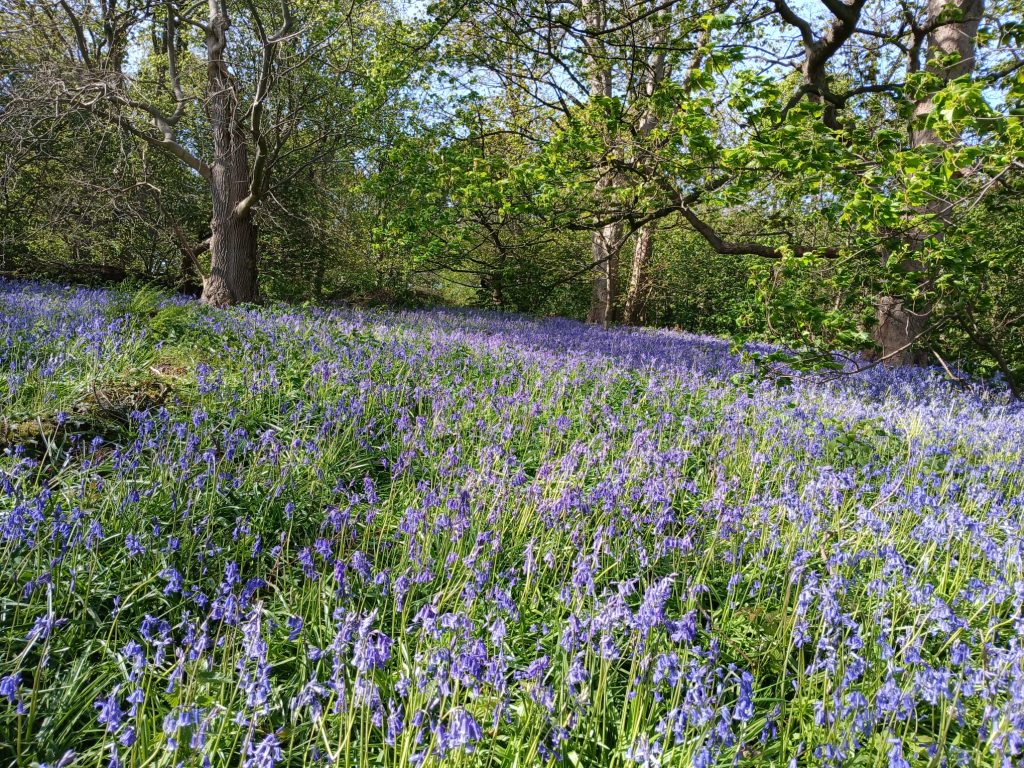
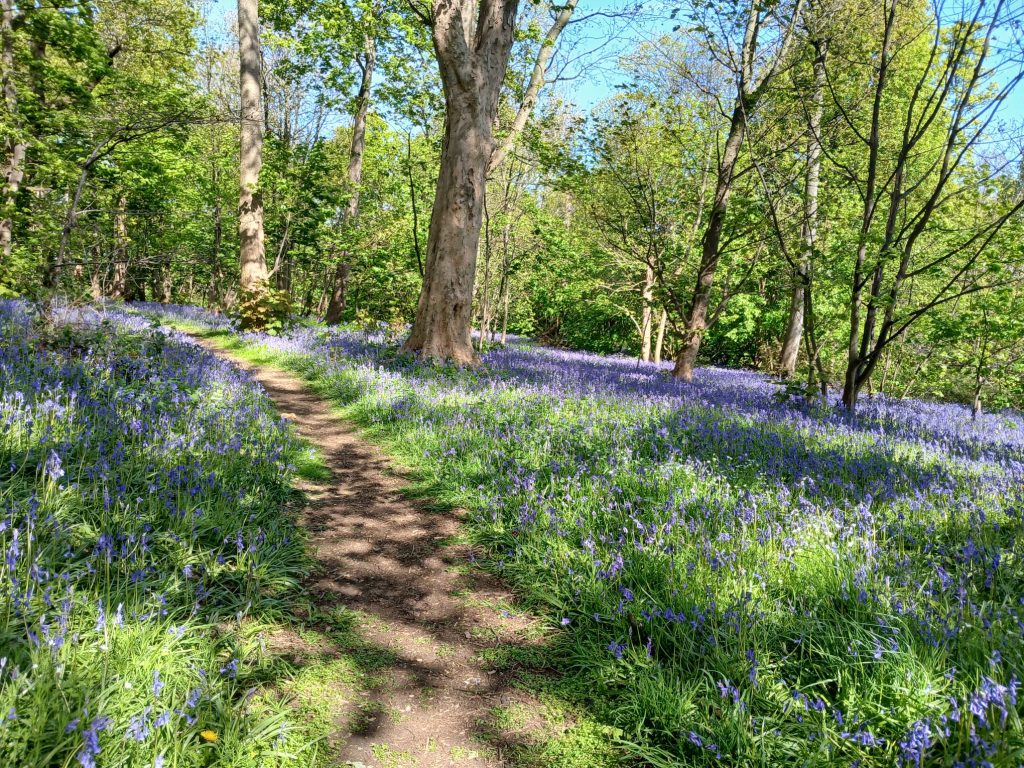
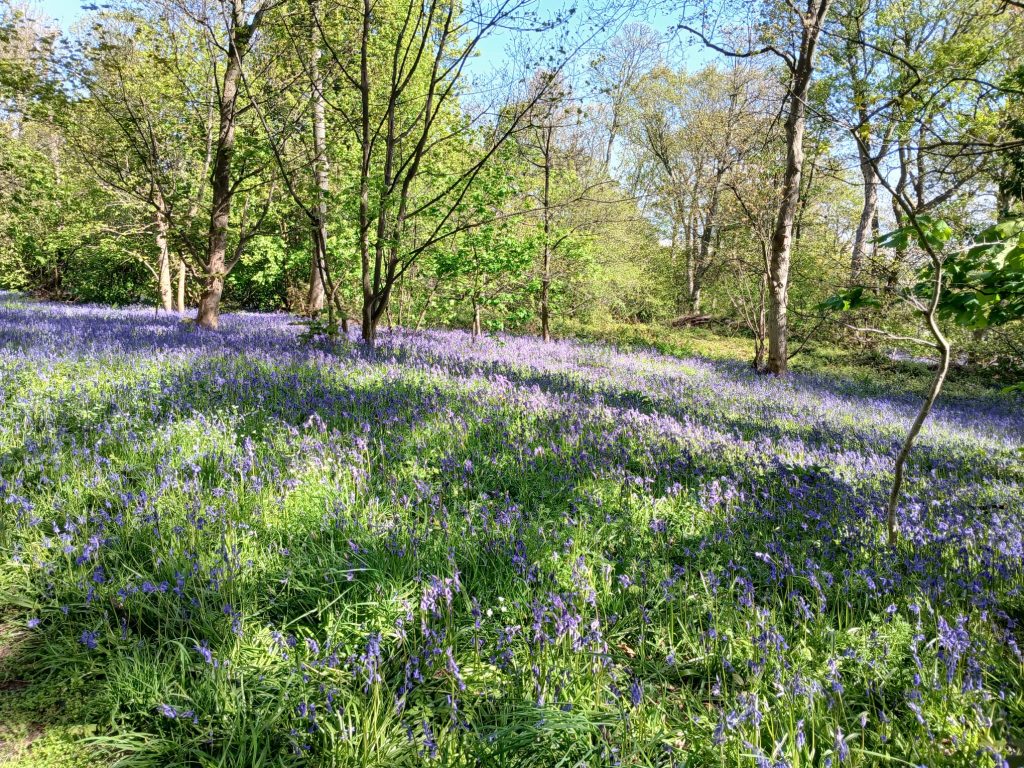
In Welsh, we call bluebells “clychau’r gog” which means cuckoo’s bells as their bloom coincides with the return of the cuckoo – a bird whose call is sadly becoming much less frequent. These connections between nature, language and culture are no coincidence, they have all grown and evolved together. This shows that in order to ensure the conservation of any of these facets of our heritage, we must work to conserve them all. Natural heritage and cultural heritage are inextricably linked, and the preservation of one is impossible without the preservation of the other.
When visiting, be sure not to trample the bluebells or you might end up upsetting the tylwyth teg – the Welsh fairies! They are said to lead disrespectful visitors astray to end up walking the woodland for centuries, stuck and unable to find their way out. It is also illegal to damage bluebells, pick them, or transplant the bulbs as they are a protected species so you would have the law of both realms to contend with!
Nature’s calendar reminds us of the passing of time and like all flowers, bluebells don’t bloom all year round. Their flowering window this year will soon be coming to a close. If you don’t manage to see them this time, be sure to come back next year to appreciate their ephemeral bloom.